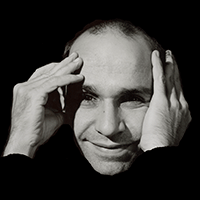
Look at the portrait below. What catches your eye first?
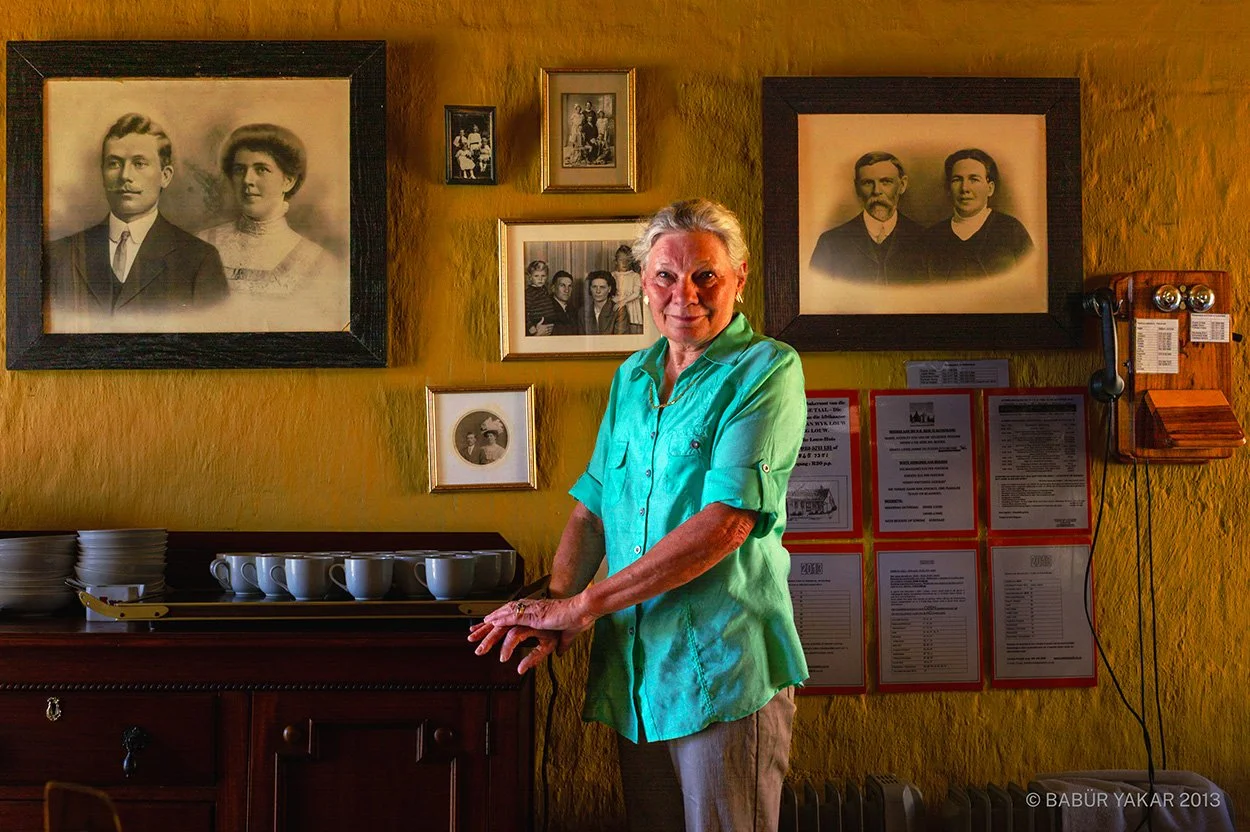
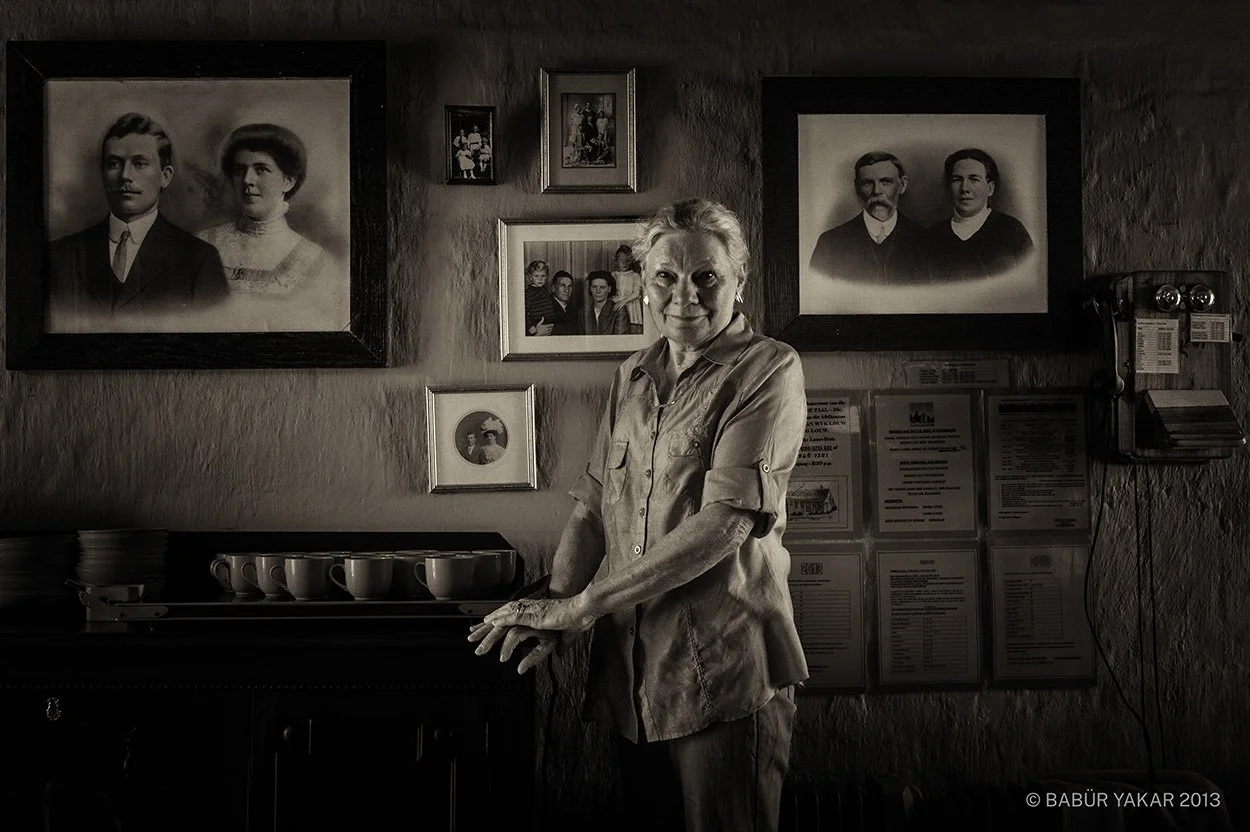
Now look at the next one: the same portrait, as a hand-crafted black-and-white print. Do you feel a difference? That subtle difference is what this post is about.
colour shows what
black and white tells who
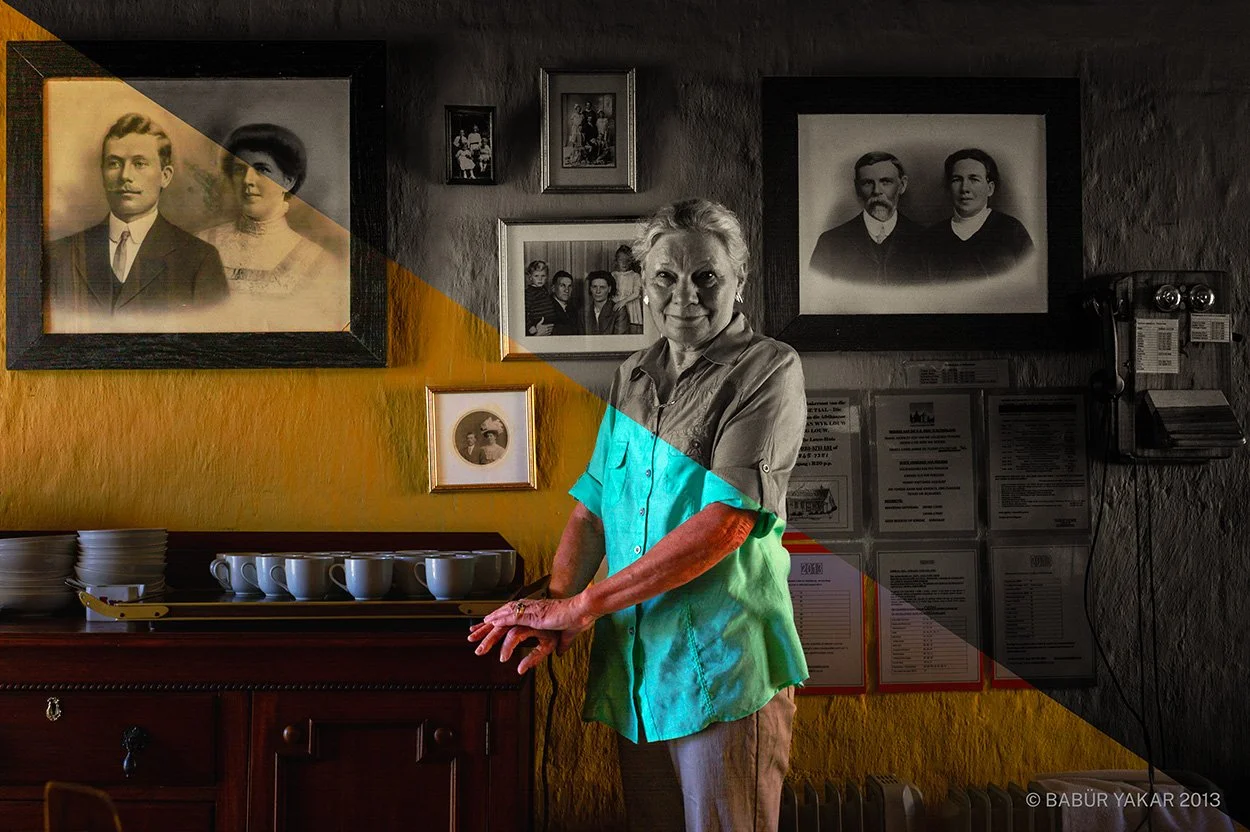
Colour adds detail to a portrait. We notice the yellow wall and the colour of her shirt straight away. Research shows that colour is stored in our memory along with the moment itself. So colour ties a photograph to a place and a date. Perhaps that’s why, whenever we see a colour photograph, we wonder: when was this taken? In our minds, colour and time are linked, deeply interconnected.
But when we take the colour out, something magical happens. The shirt and the wall become subtle; they no longer scream the way they do in colour. The woman stops being someone standing in a room in 2013 and suddenly becomes part of the family on the wall. We no longer feel the need to ask when it was taken.
When psychologists studied this, they found something interesting. Without colour, we see the whole rather than the small details.
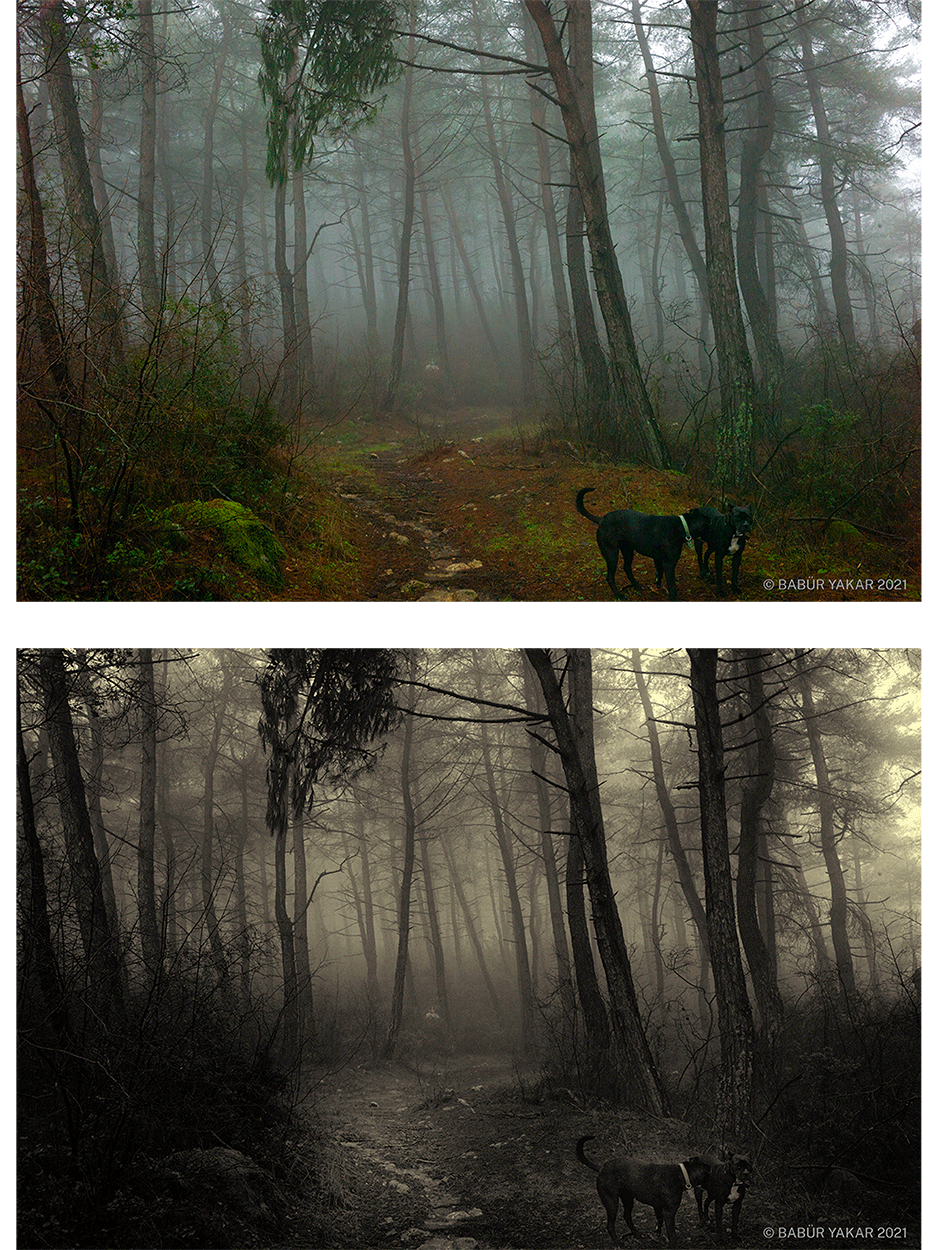
A colour photograph shows us the trees one by one. In black and white, we see the whole; we see a forest.
nostalgia, or clarity?
Some say our love of black and white comes from nostalgia. Partly true. Most of our old family photographs are black and white, so our minds link grey tones with the past: grandparents, old albums, and faded frames.
But nostalgia can’t explain everything. There’s something deeper.
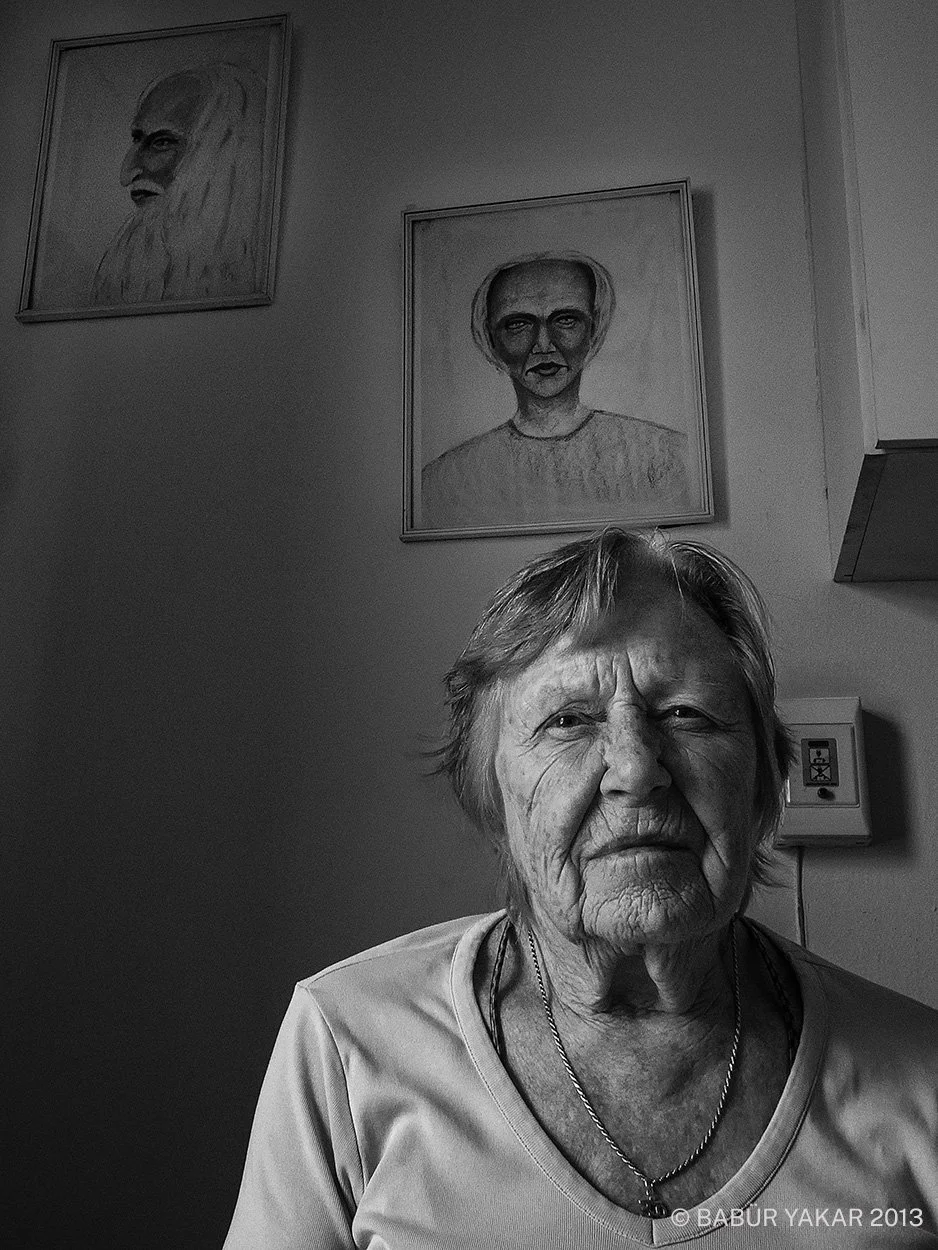
Take the black-and-white portrait below. Without colour, there’s nothing to distract you. There’s no pattern and no loud wall colour, only the lines of her face and that look in her eyes.
That’s the difference a black-and-white portrait makes. It lets us see how that person felt in that moment.
It opens a window into her soul.
it isn’t a button
Some of you probably use the “mono” filter on your phone to turn colour photos into black and white. I’m sorry to say it, but that isn’t a real black-and-white photograph. You’ve probably noticed it yourself: somehow, it never gives you the feeling you were after.
No matter how far the technology advances, I believe that making a real black-and-white portrait on a phone is as impossible as trying to do an oil painting on it. A real black-and-white portrait needs far more than a phone can provide.
Look again at the two portraits at the top. In the black-and-white version, the wall has been darkened, the cups and cabinet are in shadow, and her face and hands have been illuminated. Can you see any of that in the colour version?
In printing, this is called burning and dodging: darkening some areas and lightening others to guide your eye and tell the story. Every shadow and every highlight in the black-and-white print is there for a reason.
That’s why black-and-white printing is an art in its own right. It’s a craft born in the darkroom: telling a story in a single frame by leading your eye across the print.
It takes years to master.
a matter of choice
Colour or black and white? Every photographer makes this choice differently. Two photographers can stand in the same room and make two completely different pictures. There’s only one rule. That rule is that there are no rules. What matters is the feeling the photographer wants to reflect in the print. That’s what turns both photography and printing into an art.
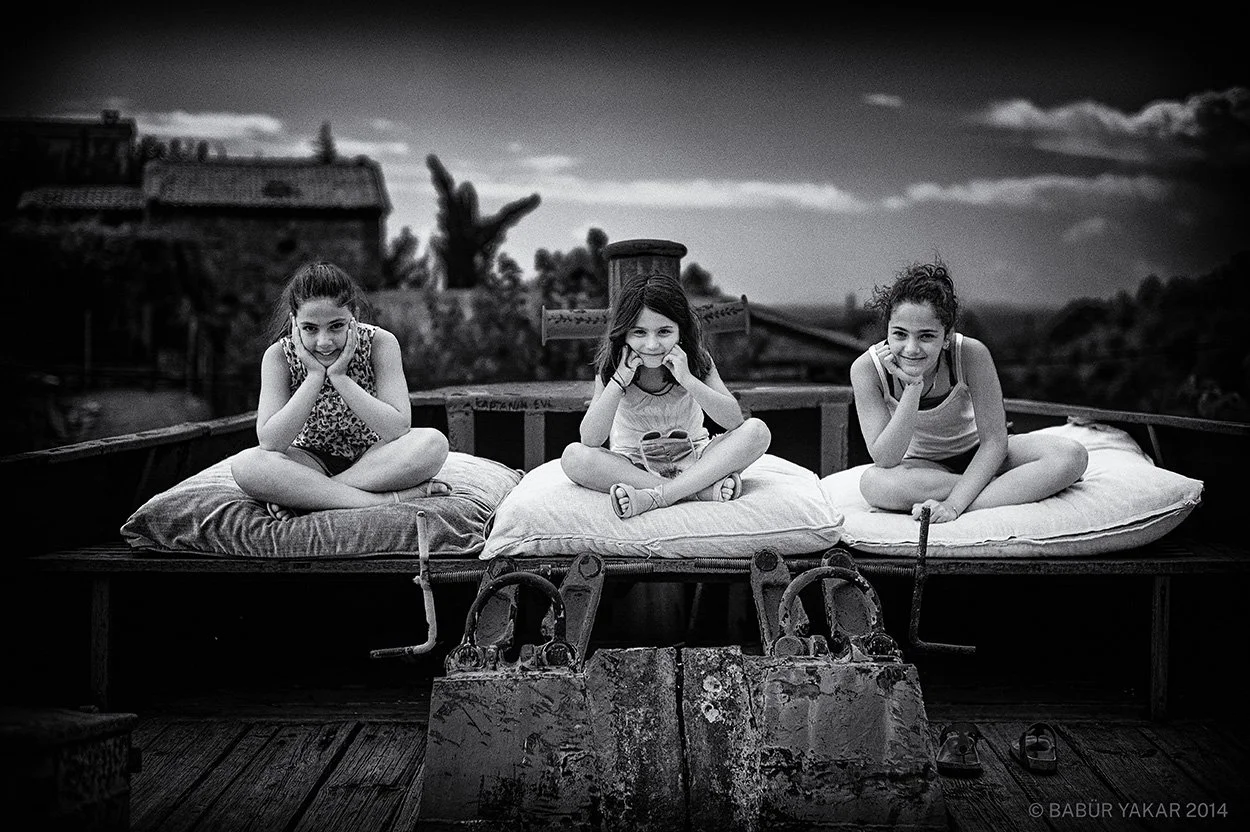
Take the portrait below. In colour, it would be a pleasant snapshot. Printed the old way, it becomes a memory.

what the masters said
Photographers have argued about this for decades. Henri Cartier-Bresson famously disliked colour photography. Robert Frank once wrote that “black and white are the colours of photography”. Don McCullin admitted we don’t live in a black-and-white world, yet “once you see a black and white photograph, it haunts you.”
colour or black and white?
In my view, there’s no single right answer. But one thing is certain: a black-and-white portrait usually carries feeling better. In rare cases, a portrait needs colour for its story to make sense.
An experienced photographer sees the finished picture the moment they press the shutter, so it’s worth leaving that decision to them.
a portrait for your wall
If you’d like a portrait on your wall that’s full of feeling, that the years can’t age, and that makes you smile every time you look at it, send me a message.